services
Full tilt services
News
about
About full tilt logistics
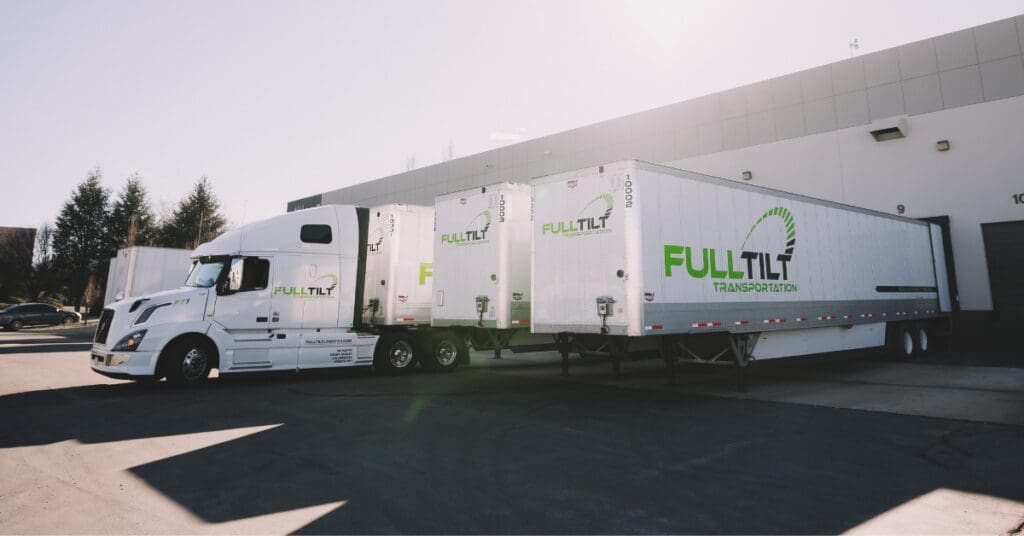
When you're moving a few loads a month, logistics can often be managed with a handful of carrier relationships and a spreadsheet.
When you're moving hundreds of loads, managing multiple lanes, coordinating warehouses, and dealing with fluctuating demand, it becomes a very different operation.
For high-volume shippers, logistics isn't simply about finding a truck. It's about having the capacity, infrastructure, visibility, and expertise to keep freight moving consistently — even when conditions change.
That's where the right third-party logistics (3PL) partner can make a difference.
But not every 3PL is built to support high-volume shippers. Before choosing a logistics partner, here are several things to consider.
For a high-volume shipper, capacity can't be an afterthought.
A logistics partner should have access to a broad network of equipment and transportation providers, allowing them to support your freight when demand increases, capacity tightens, or a regular carrier isn't available.
Ask potential 3PL partners:
The goal isn't simply to find someone who can cover today's shipment. It's finding a partner capable of supporting your operation tomorrow, next month, and when volume unexpectedly spikes.
High-volume shipping creates a lot of data.
Every lane, carrier, shipment, accessorial charge, delay, and delivery provides information that can be used to improve your transportation strategy.
A strong 3PL should be able to look beyond individual shipments and help identify opportunities across your network.
That could mean analyzing:
Instead of constantly asking, "Who can move this load?", the conversation becomes, "How can we move this entire network more efficiently?"
That's a much more valuable relationship.
High-volume shippers rarely operate at exactly the same volume every week.
Projects start. New customers come online. Production increases. Seasonal demand hits. A major shipment needs to move immediately.
Your logistics partner needs to be able to scale with you.
That means having the resources to support both your normal freight volume and the periods when your operation suddenly requires significantly more capacity.
A good 3PL should be able to adapt without forcing your team to rebuild the transportation strategy every time your needs change.
Scalability should be part of the relationship from day one — not something you discover you need when you're already in a capacity crunch.
Your freight shouldn't have to fit into one transportation model.
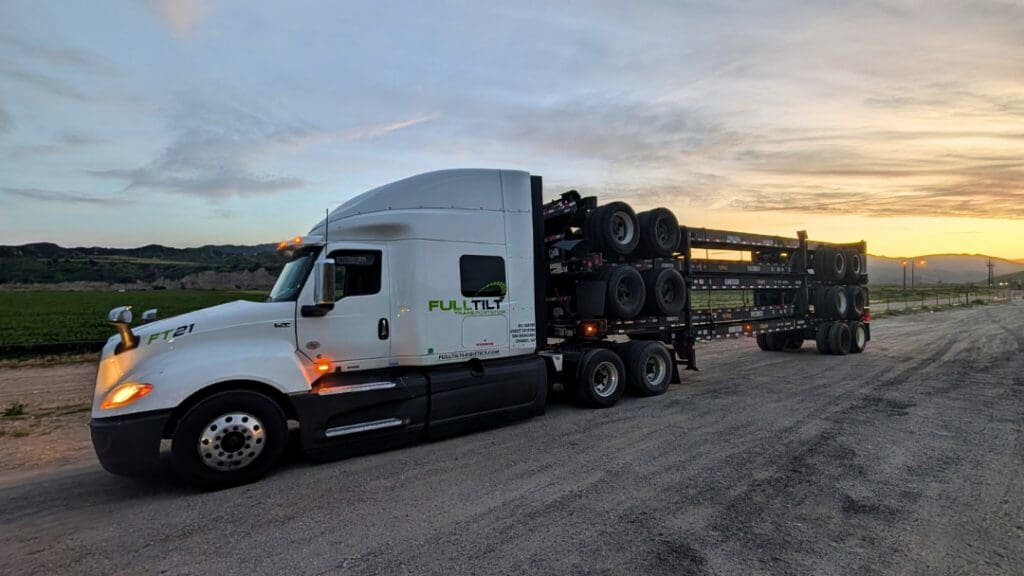
Depending on the shipment, you may need dry vans, flatbeds, straight trucks, sprinter vans, specialized equipment, drayage, or project transportation.
A 3PL that can support multiple modes and equipment types gives high-volume shippers more flexibility.
This becomes especially important for companies moving a mix of standard freight and specialized or project cargo.
Rather than coordinating several providers for different transportation needs, a broader logistics partner can help centralize those requirements and simplify communication.
For many high-volume shippers, transportation doesn't operate independently from warehousing.
Freight may need to be stored, staged, transloaded, consolidated, repacked, or distributed before reaching its final destination.
That's why it's worth evaluating a 3PL's warehousing capabilities alongside its transportation services.
Look for a partner that can connect the two.
For example, a shipment arriving at a warehouse may need to be:
Received → Stored → Picked → Staged → Loaded → Delivered
When transportation and warehousing are coordinated under one logistics strategy, there are fewer handoffs and fewer opportunities for communication gaps.
At high volumes, visibility becomes increasingly important.
Your team shouldn't have to chase down updates across dozens of emails and phone calls just to determine where a shipment stands.
Ask a prospective 3PL what technology they use to provide visibility into your freight and whether they can integrate with your existing systems.
Depending on your operation, that may include:
The technology doesn't need to be flashy. It needs to give your team useful information when they need it.
Technology is important. So is having a person who answers the phone.
When you're moving significant freight volumes, issues are inevitable. A truck will be delayed. A delivery appointment will change. A shipment will require special handling.
When that happens, you want to know who is responsible for helping solve the problem.
A good 3PL relationship should combine technology with human communication.
You shouldn't have to explain your business from scratch every time something goes wrong.
Every industry has its own logistics challenges.
A manufacturer may have recurring inbound and outbound freight. A mining company may need specialized equipment and remote deliveries. An energy company may be coordinating large-scale project shipments. A distributor may be balancing inventory and transportation across multiple markets.
Look for a 3PL that understands the realities of your freight — not simply one that can provide a truck.
The more familiar your logistics partner is with your industry, equipment, timelines, and operational requirements, the more effectively they can anticipate challenges instead of simply reacting to them.
Ultimately, the biggest question to ask is simple:
Can this 3PL grow with my business?
Your logistics needs today may look very different from your needs two years from now.
You may add new facilities, enter new markets, increase production, take on larger projects, or need additional warehousing capacity.
The right 3PL should be able to evolve alongside those changes.
At Full Tilt Logistics, we believe logistics should be built around the shipper — not the other way around.
Our team supports transportation, freight brokerage, warehousing, distribution, drayage, transloading, and project freight, giving shippers the flexibility to build a logistics strategy around their operation.
For high-volume shippers, that means having a partner that can help manage the big picture, while still paying attention to the individual shipment.
Choosing a 3PL is ultimately about more than rates.
Capacity matters. Technology matters. Warehousing matters. Industry experience matters.
But so does having a logistics partner that understands your business and can respond when things don't go according to plan.
If your team is managing a growing volume of freight, coordinating multiple providers, or spending too much time solving transportation problems shipment by shipment, it may be time to look at your logistics strategy differently.
Full Tilt Logistics helps high-volume shippers move freight with the capacity, infrastructure, and hands-on support to keep their operations moving.
Ready to talk about your freight?
Contact Full Tilt Logistics or request a quote to start the conversation.